Turtles
Ancient Navigators of the Ocean

Marine Turtles

Marine turtles have travelled our oceans for more than 110 million years. These ancient navigators survived mass extinctions, adapted to dramatic environmental changes and played a vital role in shaping the marine ecosystems we depend on today. Despite their resilience, marine turtles now face growing threats that put their future at risk.

Abel healing
Turtles Image 2
Meet Patrisha

Our Beloved Resident Green Sea Turtle

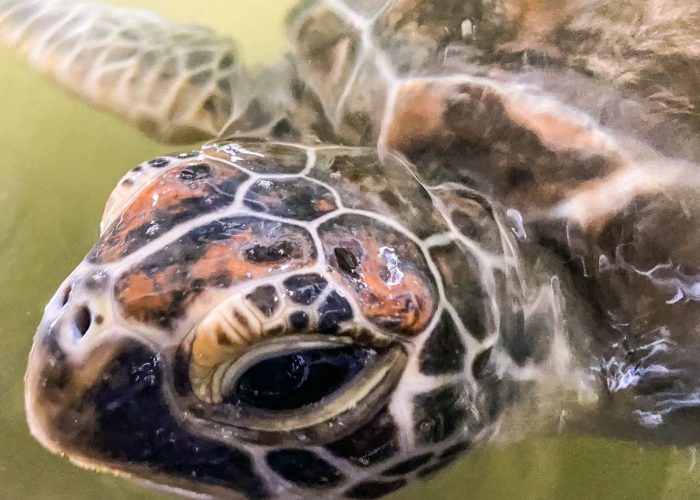
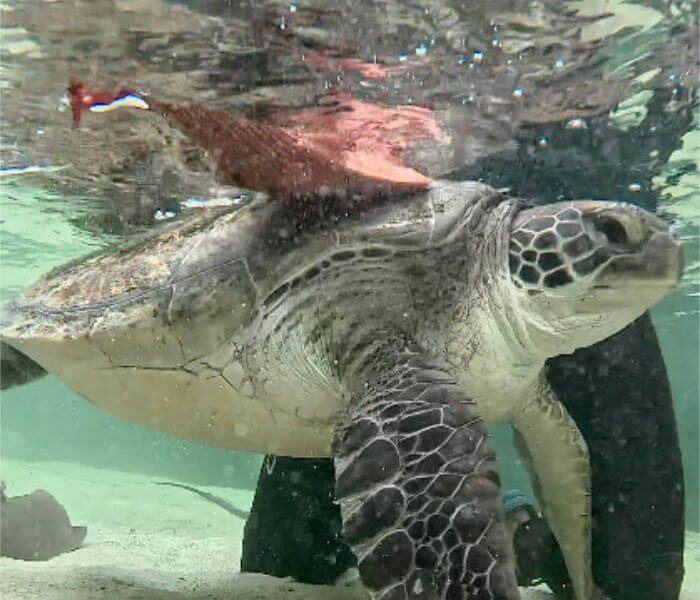
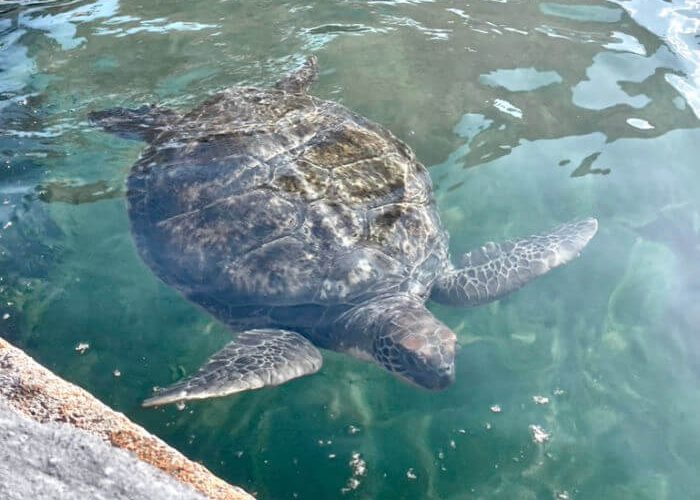
Patrisha is one of the most loved animals at Irukandji, a calm, curious and gentle green sea turtle who has captured the hearts of guests and staff alike. Rescued after suffering injuries that prevented her from returning to the wild, she now plays an important role as an ambassador for her species.

Through Patrisha’s story, visitors gain a deeper understanding of the challenges marine turtles face and the vital work carried out by Sea Shelter and our team.

Learn more about her journey, personality and daily care on her dedicated page below.

Conservation Status

A Global Crisis Impacting All Marine Turtle Species

Six of the seven species are currently threatened with extinction — a clear sign of the pressures they face worldwide. Their conservation status includes:

  • Critically Endangered: Hawksbill, Leatherback, Kemp’s Ridley
  • Endangered: Green, Loggerhead, Olive Ridley
  • Vulnerable: Flatback

Key threats include climate change, plastic pollution, entanglement in fishing gear, habitat loss and illegal harvesting.

Turtles Image 3

Leatherback Highlights

The Largest Sea Turtle Ever Recorded

Leatherbacks are the giants of the turtle world. The largest leatherback ever documented was discovered in Wales in 1988:

Weight: 961.1 kg
Length: 2.91 m
Flipper Span: 2.77 m

This gentle ocean traveller remains one of the heaviest turtles — and one of the largest reptiles — ever recorded.

Turtles Image

Green Turtle Diet

A Life of Change From Hatchling to Adult

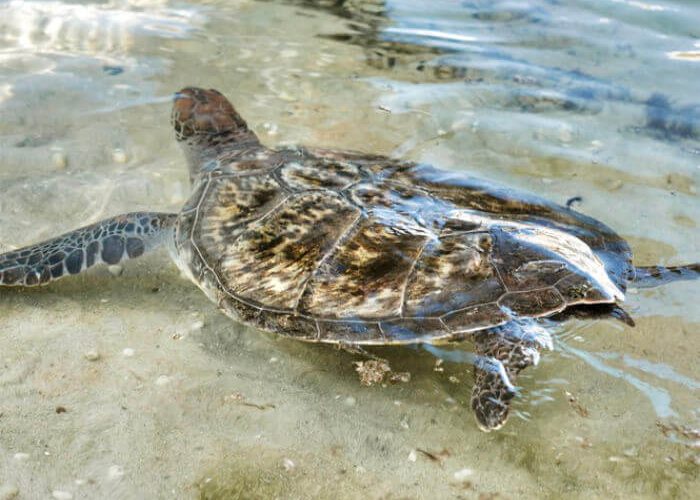
Green sea turtles begin life as omnivores, feeding on jellyfish, fish, snails, squid and small invertebrates. As they grow, they transition to a mostly herbivorous diet of seagrass and algae, becoming essential gardeners of coastal ecosystems.

Their name comes not from their diet, but from the greenish fat beneath their shell.

Climate Change & Hatchling Balance

Rising Temperatures Are Creating Too Many Females

Sea turtles rely on temperature-dependent sex determination:

  • Cooler sand (<27.7°C): More males
  • Warmer sand (>31°C): More females

With global temperatures rising, nesting locations such as Raine Island in Australia are now producing over 99% female hatchlings. This extreme imbalance threatens the long-term survival of wild populations.

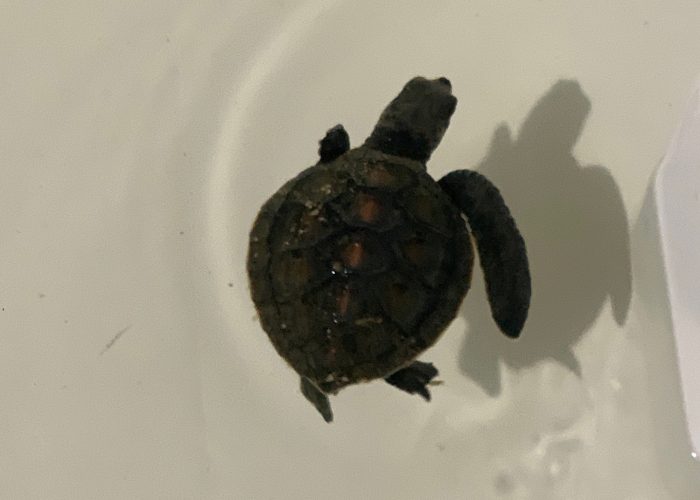
baby turtle
Protecting Turtles in Port Stephens & the Hunter

Irukandji & Sea Shelter Turtle Conservation

rukandji Shark & Ray Encounters, together with our non-profit partner Sea Shelter, proudly supports turtle conservation through hands-on rescue, rehabilitation and community education.