
Meet the Ocean’s Apex Legends
Sharks are The Protectors of Our Blue Planet
Sharks are the quiet guardians of the sea, keeping ocean ecosystems healthy, balanced, and thriving. At Irukandji, you’ll meet species that are curious, gentle, and far more misunderstood than feared. From graceful gliders to powerful cruisers, each shark has its own story, and its own vital job in the marine food chain. Step into the water and discover what makes these incredible animals some of the most important creatures on Earth.
Port Jackson Shark
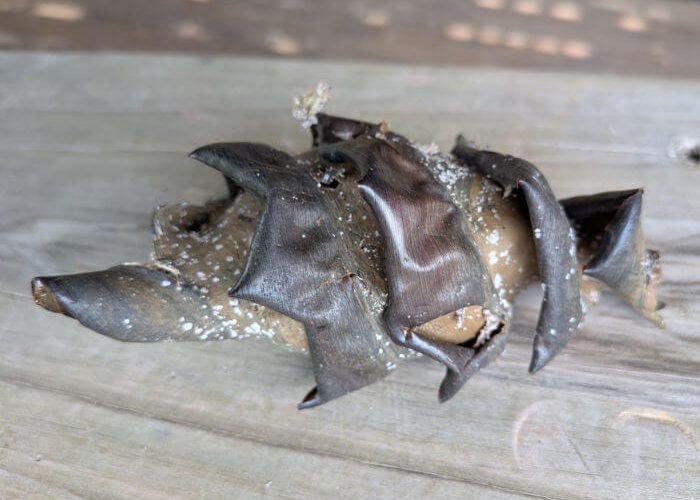
Port Jackson Sharks (Heterodontus portusjacksoni) are listed as Least Concern on the IUCN Red List, meaning they are not currently considered threatened. They are especially notable for their unique spiral-shaped egg cases, which females wedge into rocky crevices to protect the developing embryo.
At the aquarium, visitors can learn that these sharks are endemic to southern Australian waters and are highly resilient, often surviving after being caught and released as bycatch. Unlike many sharks, they are oviparous, laying eggs rather than giving live birth. Their egg cases are dark brown, corkscrew-like structures that take about a year before the young hatch. This adaptation helps secure the eggs in rocky reefs, preventing them from being washed away by currents.
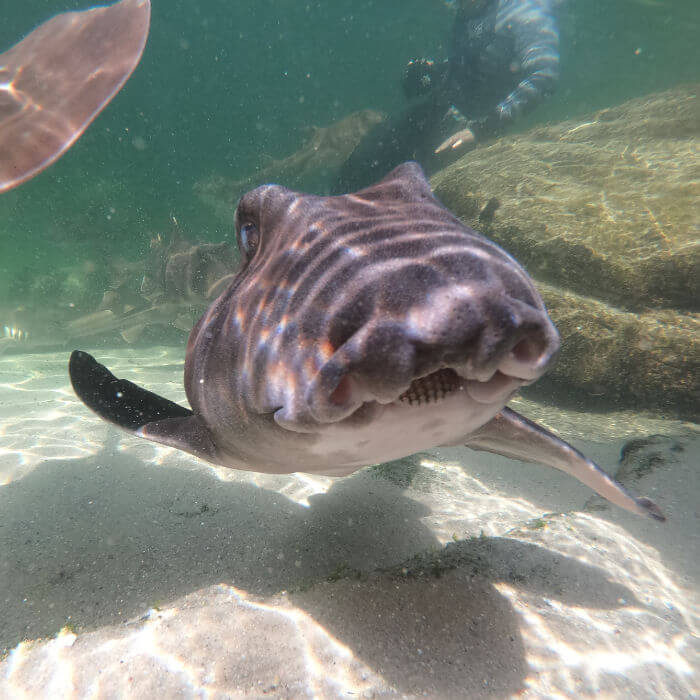
Port Jackson Sharks are easily recognized by their blunt heads and harness-like markings across their bodies. They use sharp front teeth for grasping and flat molars at the back to crush hard-shelled prey such as mollusks, crustaceans, and sea urchins. Despite their somewhat intimidating appearance, they are generally harmless to humans.
Adding to the fun, the aquarium features several cheeky resident sharks each with their own quirks that make them favorites among visitors. These individuals help highlight the species’ fascinating biology while giving guests a more personal connection to the exhibit.
- Cashew
- Pistachio
- Shego
- Chorizo
- Hazel
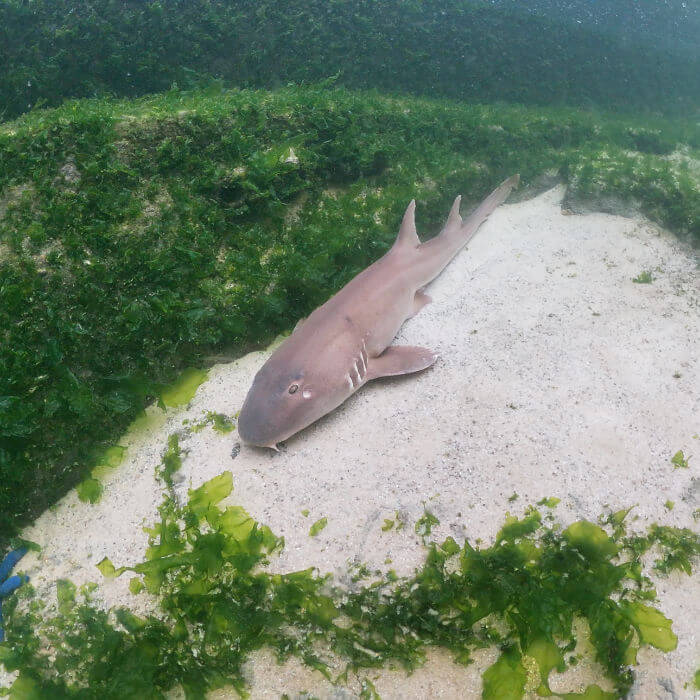
Bamboo Shark
The brown banded bamboo shark (Chiloscyllium punctatum) is a fascinating species known for its extraordinary ability to survive in environments with almost no oxygen, shutting down non-essential brain functions to endure tide pools or shallow waters where oxygen levels drop dramatically. Juveniles are easily recognized by the dark brown bands across their slender bodies, which fade as they mature, though the name “brownbanded” remains. Their elongated, flexible form and habit of weaving through reef crevices earned them the “bamboo” nickname. Listed as Near Threatened on the IUCN Red List, they face pressures from habitat loss and collection for aquariums, though they adapt well in captivity. These sharks are oviparous, laying distinctive egg cases that hatch after several months, and they feed by suctioning up small prey from the seafloor.
At the aquarium, visitors can meet a lively group of resident brownbanded bamboo sharkswhose playful personalities make them a highlight of the exhibit while showcasing the resilience and charm of this unique species.
- Calypso
- Aang
- Cheeto
- Flipper
- Hoderi
- Iroh
- Jaws
- Min
- Raijin
- Sprout
- Wei
- Amaterasu
- Izanami Jade
- Mala
- Mulan
- Silky
- Violet
- Yue
Zebra Sharks
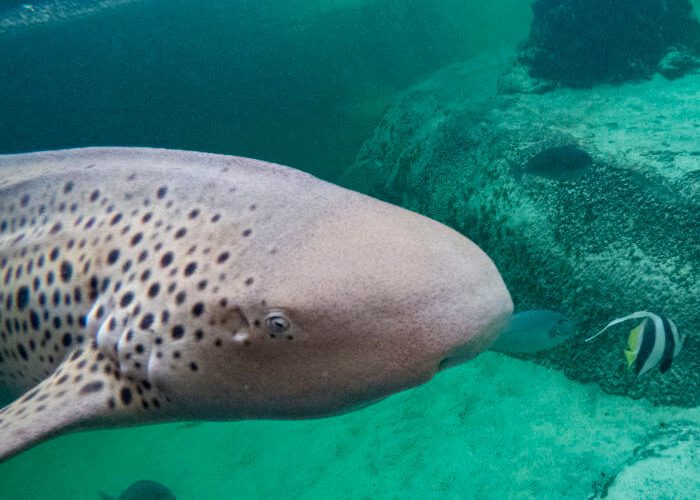
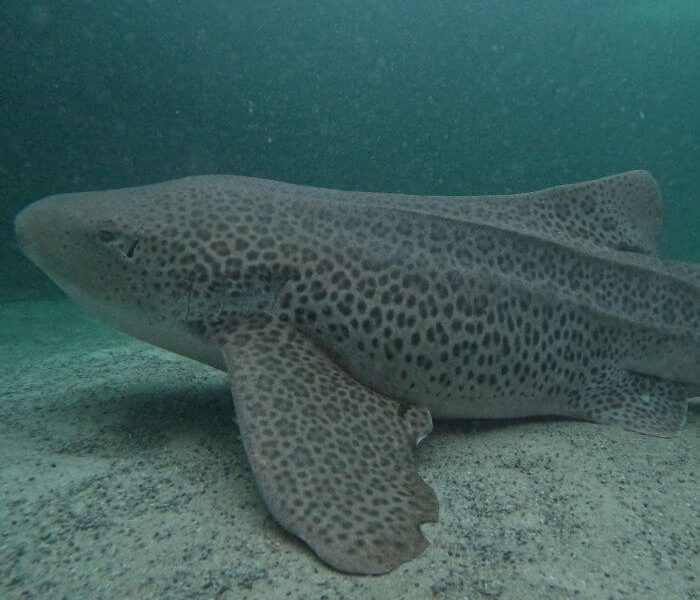
The zebra shark (Stegostoma tigrinum) is a gentle shark found in warm, shallow waters across the Indo-Pacific. When they are young, zebra sharks have bold black-and-white stripes, which is how they got their name. As they grow older, those stripes fade into spots, which is why some people call them “leopard sharks.” At the aquarium, we prefer “zebra shark” because it celebrates their striking juvenile look and avoids confusion with other species already called leopard sharks.
Zebra sharks are oviparous, which means they lay eggs instead of giving birth to live young. Mating is a gentle process: the male and female swim close together, and the male uses his fins to hold onto the female so he can pass along what’s needed to fertilize her eggs. Later, the female lays large, leathery egg cases that protect the baby sharks until they are ready to hatch.
Visitors can meet our calm and curious zebra sharks each with their own gentle personality. Our very special sharks are part of a groundbreaking global conservation program. This unprecedented effort brings aquariums and scientists together to reintroduce zebra sharks into areas where they have disappeared, helping restore wild populations and protect the future of these beautiful animals.
- Astraea
- Atlas
- Cleo
- Greg
- Nova
- Peggy
Epaulette Sharks
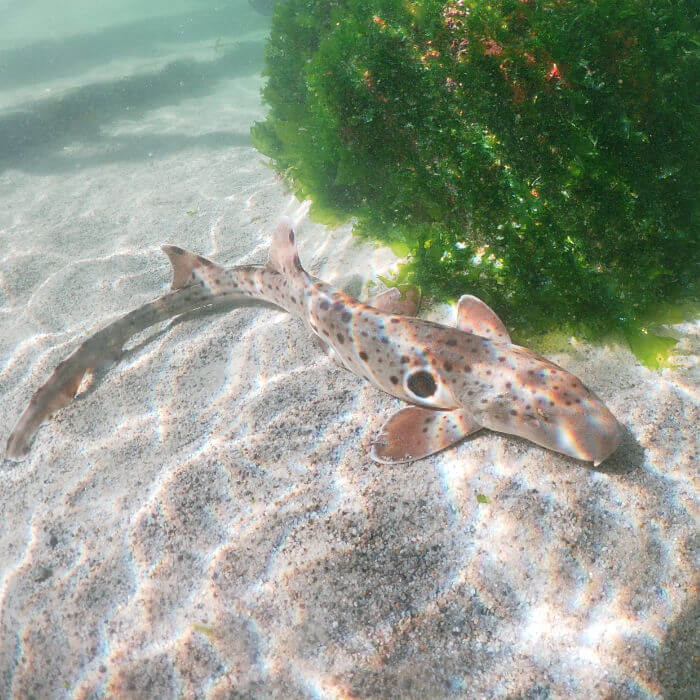
Epaulette sharks (Hemiscyllium ocellatum) are small, curious sharks famous for their ability to “walk” across the seafloor using their muscular pectoral and pelvic fins.
These remarkable sharks live in shallow coral reefs and tide pools around Australia and New Guinea. Their unique walking ability allows them to move between pools at low tide, navigate obstacles, and search for food in places where other sharks cannot go. A fun fact is that they can even survive short periods out of water while “walking” between tidal pools, making them one of the most adaptable shark species.
Epaulette sharks are oviparous, meaning they lay eggs rather than giving birth to live young. Egg gestation typically lasts around 3-4 months, after which the baby sharks hatch from tough, leathery egg cases. During this vulnerable stage, the eggs face threats from predators such as larger fish, crabs, and even other sharks that may feed on them.
At the aquarium, visitors can meet some of our most curious-natured individuals each with their own personality that makes learning about epaulette sharks even more engaging. Their playful “walking” behavior and resilience in challenging habitats highlight why these sharks are such a favorite among guests and an important species to protect.
- Spotty
- Dotty
- Riley
- Mary
Tawny Nurse Shark
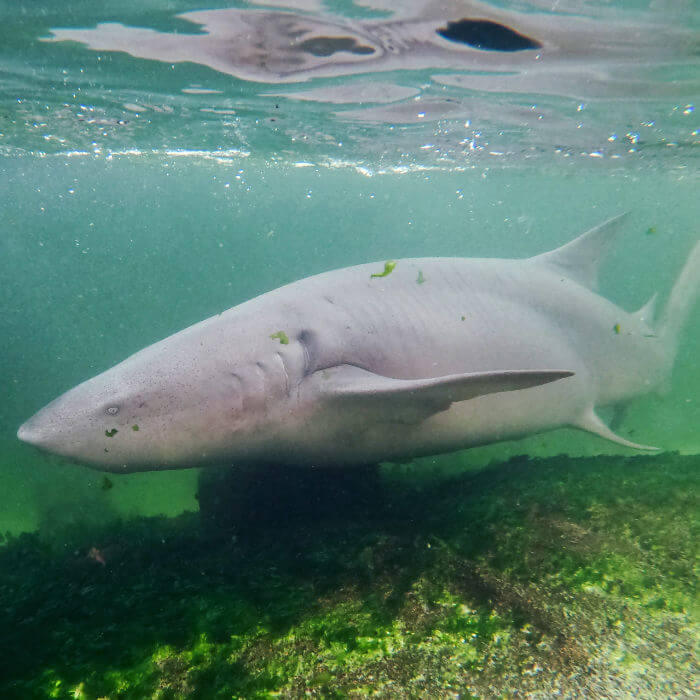
The tawny nurse shark (Nebrius ferrugineus) is the largest shark species kept in aquarium, reaching up to 3.2 meters in length and weighing around 150-270 kilograms. Globally, they are listed as Vulnerable on the IUCN Red List due to overfishing and habitat pressures. Unlike egg-laying sharks, tawnies are aplacental viviparous, meaning their pups develop inside the mother’s body, nourished by yolk sacs until they are born live.
Their name “nurse shark” is thought to come from the sucking or “nursing” sound they make while feeding, and they are famous for their incredible suction ability, which allows them to pull prey such as fish, crustaceans, and molluscs out of reef crevices. A fun fact is that they are sometimes called “spitting sharks” because they often expel jets of water after feeding.
Unfortunately, tawny nurse sharks are heavily fished for their meat, fins, and especially their livers, which are rich in squalene, a compound historically used in cosmetics and supplements. Protecting them means making conscious choices—such as avoiding products that use shark-derived squalene and choosing plant-based alternatives instead.
At the aquarium, visitors can meet our fun loving tawny nurse sharks who not only showcase the impressive biology of their species but also highlight the importance of conservation efforts to ensure these gentle giants continue to thrive.
- Mungo
- Houdini
- Jessica
- Aerial
Whitetip Reef Shark
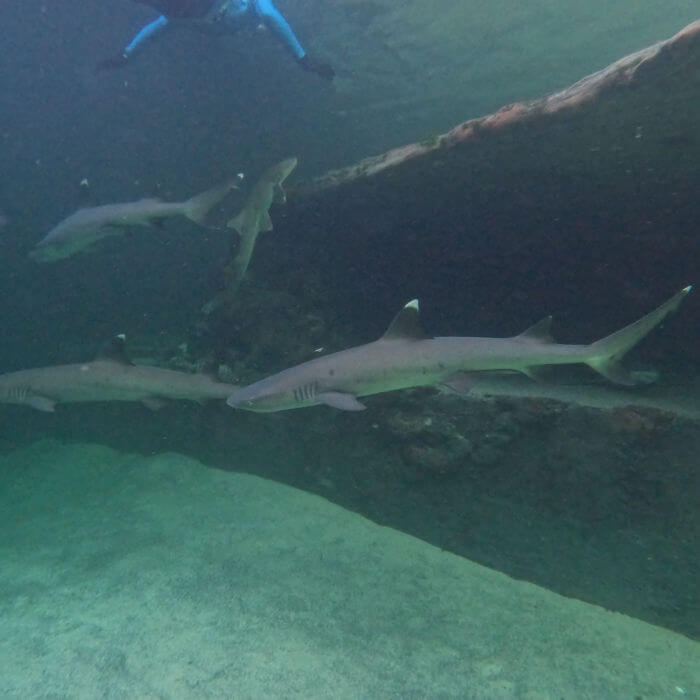
The whitetip reef shark (Triaenodon obesus) is one of the most iconic schooling shark species found in aquariums and coral reefs across the Indo-Pacific. They are currently listed as Vulnerable on the IUCN Red List due to overfishing and habitat loss. These sharks are named whitetips because of the distinctive white markings on the tips of their dorsal and caudal fins, which make them easy to recognize when swimming in groups.
Whitetip reef sharks typically grow to about 1.6–1.8 meters in length and weigh up to 20 kilograms. They are incredible hunters in low-light conditions, often working together in packs to flush prey out of reef crevices. Using their highly sensitive ampullae of Lorenzini tiny electroreceptors around their snouts they can detect the faint electrical signals given off by fish, allowing them to target weak, sick, or dying individuals. This behaviour plays an important role in maintaining reef health, as it helps keep fish populations balanced and ecosystems resilient.
At the aquarium, visitors can meet our lively whitetip reef sharks named after famous boy and girl bands thanks to their frosted fin tips. These characters not only showcase the fascinating biology of whitetip reef sharks but also highlight their importance as guardians of reef ecosystems.
- Justin
- Brian
- Nick
- Martha
- Posh
- Victoria