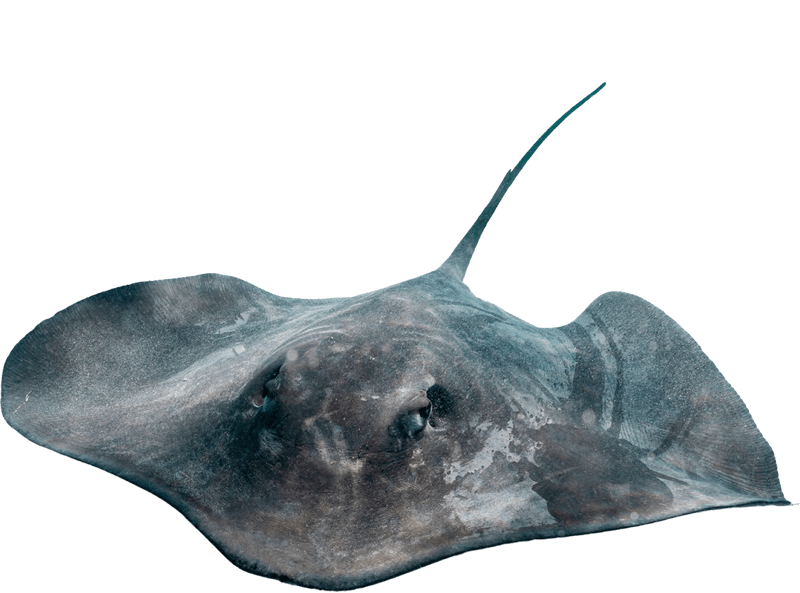

Discover Our Rays
Meet the Graceful Gliders of Irukandji
Rays are some of the ocean’s most graceful travellers, gliding like underwater birds through sandy bays, coral reefs and estuaries across Australia’s east coast. From gentle fiddler rays to powerful smooth rays and brilliantly patterned blue-spotted species, these incredible animals play a vital role in keeping marine ecosystems healthy.
At Irukandji, you’ll meet a diverse family of rays, each with their own personality, quirks and charm, while learning how to tell them apart, how they communicate, and how you can help protect them in the wild.
Smooth Ray
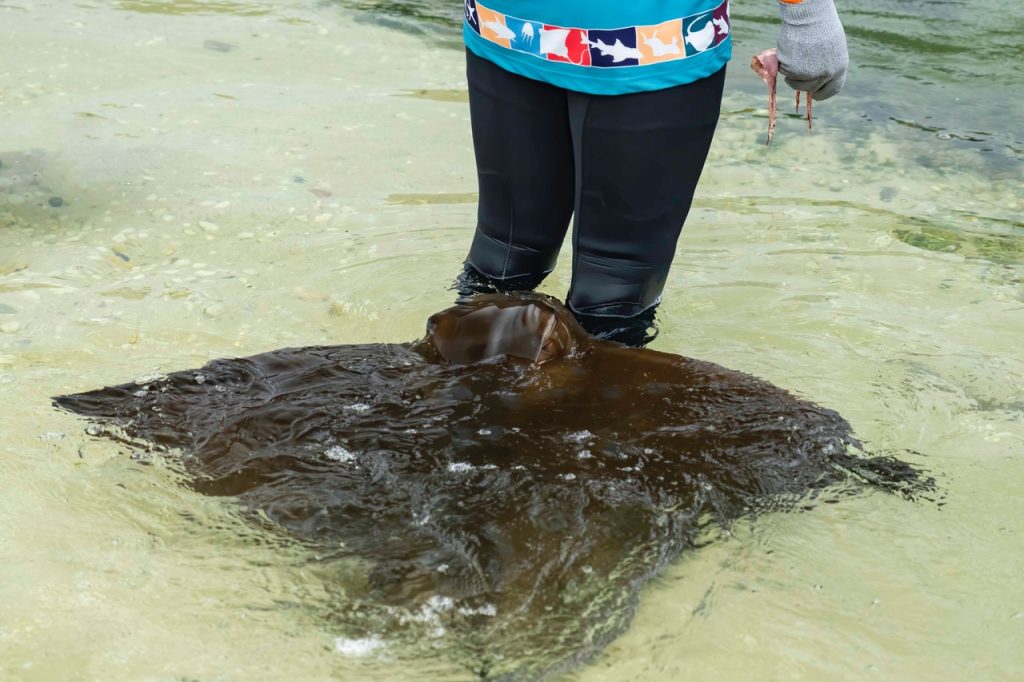
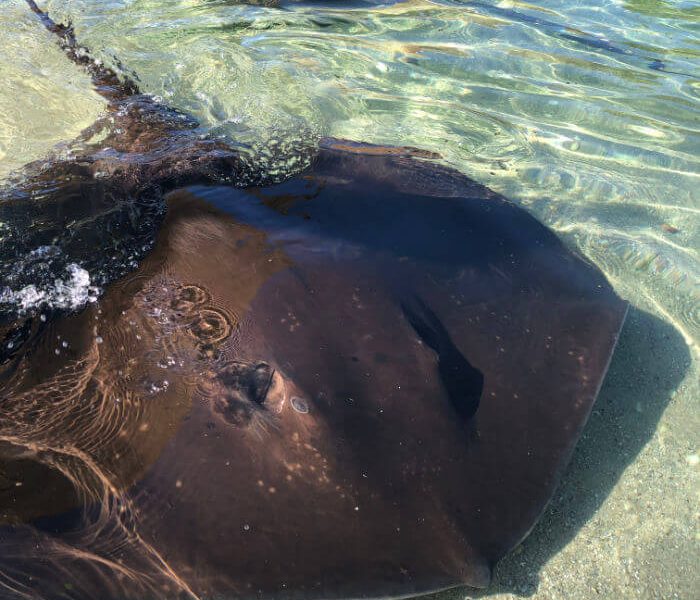
The smooth stingray (Bathytoshia brevicaudata) is currently listed as Least Concern by the IUCN, meaning it is not considered endangered. It is one of the largest stingray species in Australian waters and plays a vital role in coastal ecosystems. You will meet Frizzle and Rascal, 150kg Males. Uses body language, making grinding noises, electroreception, and chemical cues to communicate with the environment and other rays.
Did you know Claspers: The most reliable way to differentiate is by looking underneath the rays and sharks.
- Males have a pair of long, finger-like claspers extending from their pelvic fins.
- Females lack claspers and instead have smooth, rounded pelvic fins.
Size Differences: In some species, females are larger than males, especially in mature individuals. However, this can vary and is not always a reliable indicator on its own.
Southern Eagle Ray
Southern Eagle Ray (Myliobatis australis) Currently not listed as threatened, but like many rays, they may be vulnerable to habitat degradation and fishing bycatch.
The Southern Eagle Ray is a graceful, winged marvel of the southern seas gliding through temperate waters with elegance and power. These rays can weigh over 50 kilograms and are known for their striking presence and fluid movement.
- Social Swimmers: Often seen in small groups, especially during seasonal migrations.
- Graceful Gliders: Their broad, wing-like pectoral fins allow them to “fly” through the water with minimal effort.
At our facility, you’ll meet Stripes, Tiger, and Stump, our three resident Southern Eagle Rays, each with their own unique personality and charm.
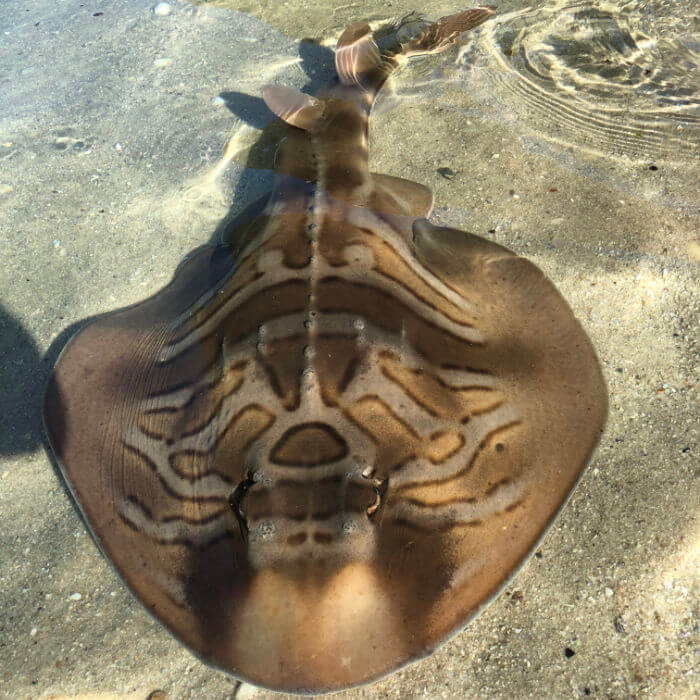
Eastern Fiddler Ray
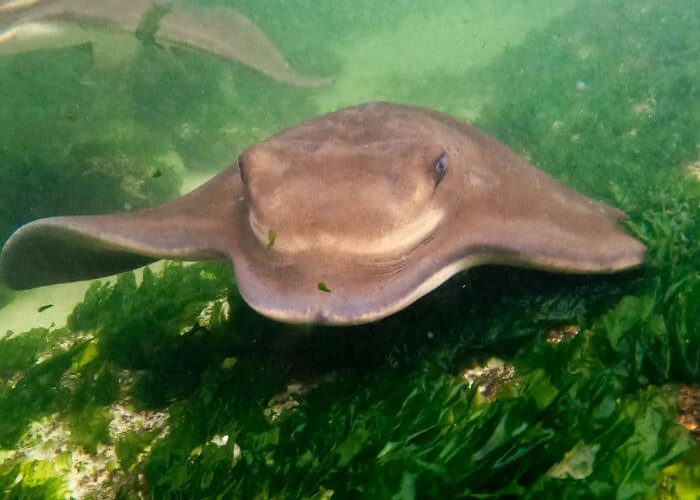
Eastern Fiddler Ray Trygonorrhina fasciata are also not currently listed as threatened, but like many rays, they may be vulnerable to habitat degradation and fishing bycatch
The fiddler ray, also known as the banjo ray, is a quirky bottom-dweller found along Australia’s southern and eastern coasts. With its banjo-shaped body and gentle nature, it’s part of the guitarfish group, more mellow than its stingray cousins. These rays love to cruise along sandy bays and rocky reefs, feeding on crustaceans and molluscs with their flat, crushing teeth.
At our facility, you’ll meet Chickpea, Dumpling, Frenchie, Indy, Petal, Silveria, Totcho, and Waffle—each with their own unique personality, from curious explorers to laid-back loungers.
Unlike stingrays, fiddler rays don’t have venomous tail barbs. In fact, that’s one of the easiest ways to tell them apart: stingrays come equipped with a sharp spine for defence, while fiddler rays rely on camouflage and charm.
Stingrays also tend to have more diamond-shaped bodies, whereas fiddler rays sport a rounded snout and a banjo-like silhouette. So, while all stingrays are rays, not all rays are stingrays, and fiddler rays are the musical, mellow members of the family.
Blue Spotted Mask Ray
The blue-spotted maskray (Neotrygon kuhlii) is a dazzling little stingray that looks like it’s been sprinkled with neon confetti! With its vibrant blue spots and mask-like markings around the eyes, it’s one of the most eye-catching rays in the reef.
These rays are bottom dwellers, often found gliding gracefully over sandy flats and coral rubble in warm Indo-Pacific waters. Like all stingrays, blue-spotted maskrays give birth to live young, a fascinating trait known as ovoviviparity, where pups develop inside eggs within the mother and are born fully formed. Currently listed as Least Concern by the IUCN, they still face threats from habitat degradation and fishing pressures. At our aquarium, you’ll get to meet our trio of blue-spotted charmers: Tortilla, Pancake, Sam and much more, each with their own splash of personality and sparkle.
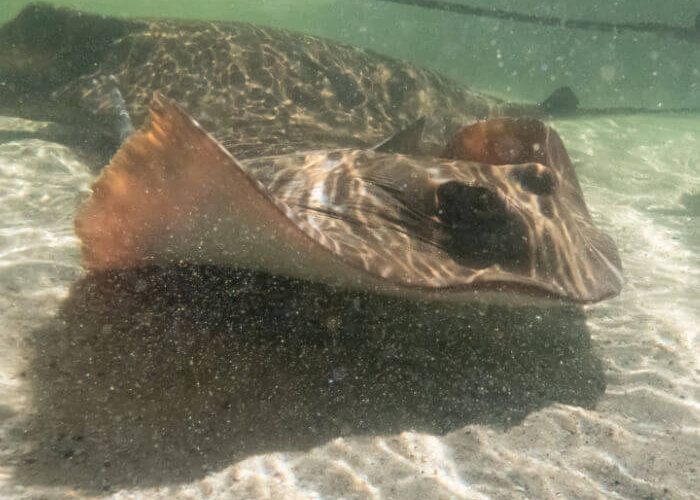
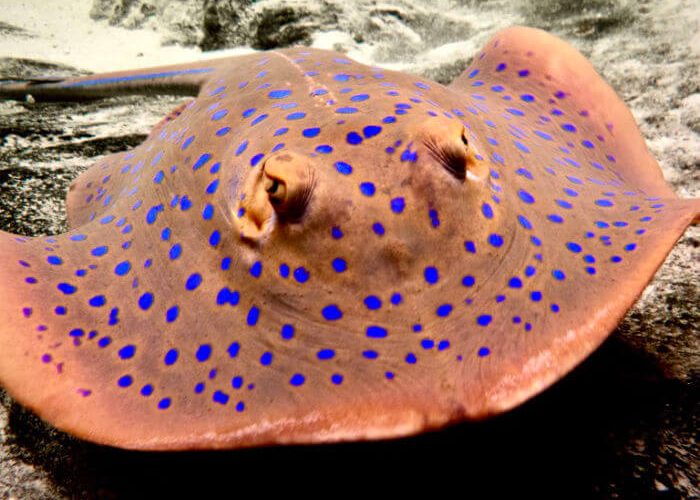
Blue Spotted Fantail Ray
The blue-spotted fantail ray (Taeniura lymma) is a stunning reef-dweller known for its vibrant, electric-blue spots and long, ribbon-like tail. Found in shallow lagoons and coral reefs across the Indo-Pacific, this species is a master of camouflage, often burying itself in sand with only its eyes peeking out. Despite its beauty, it’s equipped with venomous spines on its tail for defence, though it’s generally shy and non-aggressive. The species is currently listed as Near Threatened by the IUCN due to habitat loss and overfishing in some regions. At our facility, you’ll meet eleven charismatic individuals—**Alfie, Betty, Gerald, Jeffery, Kevin, Pearl, Pebbles, Roxanne, Sapphire, Steve and Wilma, each with their own splash of personality and charm.
Giant Shovel Nose Ray
The giant shovelnose ray (Glaucostegus typus) is a striking, shark-like ray with a big presence both in size and personality. At our facility, you’ll meet Misty and Shadow, two enormous individuals with equally enormous charm. With a body that can grow up to 2.7 meters long, the giant shovelnose ray is one of the largest members of the guitarfish family. Its name comes from its broad, flattened snout that resembles, you guessed it, a shovel. Found throughout the Indo-Pacific, including northern Australia, this species prefers sandy or muddy bottoms in coastal and estuarine waters, where it feeds on crustaceans, molluscs, and small fish. Despite its shark-like appearance, it’s a ray through and through, complete with live birth reproduction—meaning pups are born fully formed after developing inside the mother. Globally, the giant shovelnose ray is listed as Vulnerable on the IUCN Red List due to habitat loss, overfishing, and the high value of its fins. However, in Australian waters, it benefits from stronger management and is currently considered Least Concern locally.
Misty and Shadow, our resident giants, are gentle ambassadors for their species, gliding gracefully through their habitat and reminding us why these incredible animals are worth protecting.
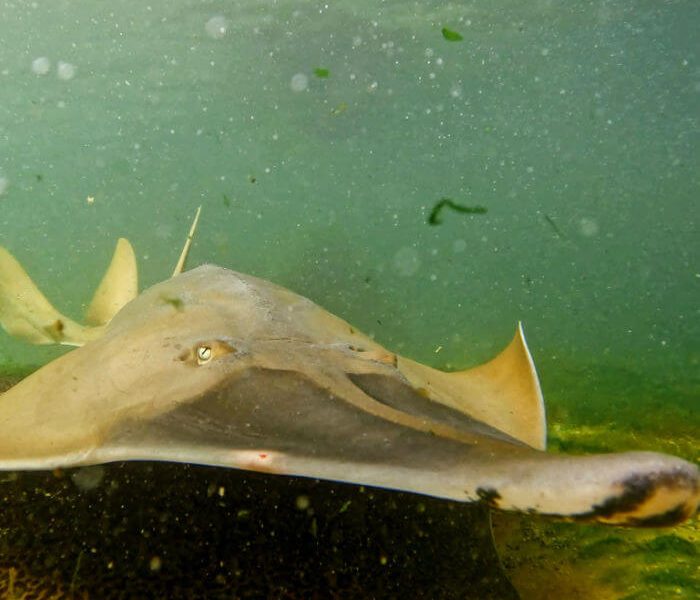
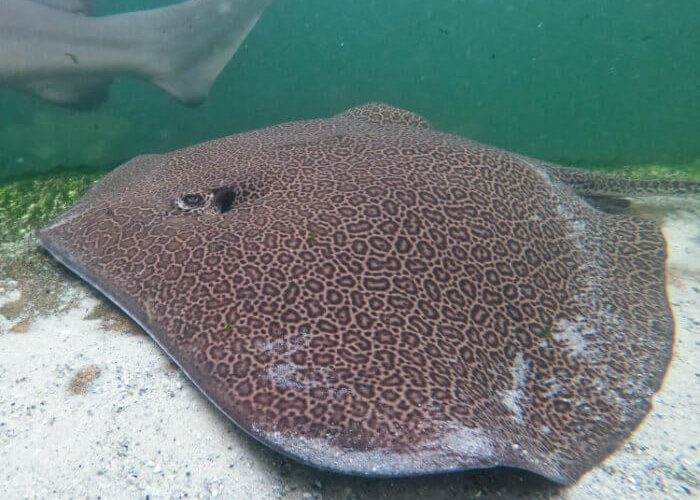
Reticulate Whipray
The reticulate whipray (Himantura uarnak) is a stunning stingray species known for its intricate, net-like pattern across its disc, like nature’s own mosaic. With a disc width that can exceed 1.8 meters and a tail that stretches even longer, this ray glides elegantly across sandy seabeds and coral flats throughout the Indo-Pacific. It’s a bottom-dweller that feeds on crustaceans and small fish, using its electroreception to detect prey hidden beneath the sand. Like all stingrays, the reticulate whipray gives birth to live young, a fascinating reproductive trait that ensures pups are born fully formed and ready to explore. The species is currently listed as Vulnerable on the IUCN Red List due to habitat degradation and fishing pressures. At our facility, you’ll meet Lorenzo, an enormous personality wrapped in a beautifully patterned package, graceful, curious, and a true ambassador for his species.
Go Beyond Watching
Snorkel Beside Our Rays
Glide through the lagoon and see our rays from a whole new perspective in this immersive, unforgettable in-water experience.